See us at E-Waste World Expo 2026 ( Booth D136 ) June 17-18th , Messe Frankfurt, Germany

High-Precision rotary slitter knives for Paraguay's Industrial Sector

Engineering superior cutting performance and durability for the evolving manufacturing landscape of South America.

High-Precision rotary slitter knives for Paraguay's Industrial Sector

Providing world-class cutting solutions that enhance operational efficiency and product precision for Paraguayan metal and food processing plants.

Industrial Cutting Landscapes in Paraguay

Analyzing the intersection of metallurgy and regional manufacturing demands.

Paraguay's manufacturing sector is currently experiencing a transition towards automation, particularly in the packaging and agri-food processing industries. The humid subtropical climate of the region poses a significant challenge to tool longevity, necessitating the use of advanced slitting machine blades that can resist oxidation and maintain edge sharpness under high-stress environments.

In the heart of South America, local factories are moving away from generic tooling toward specialized components. The demand for straight cutting blade options has surged as the construction and metal fabrication sectors expand, requiring tighter tolerances to compete in the Mercosur trade bloc.

Moreover, the growth of the food export industry has placed a premium on hygiene and precision. This has led to a critical need for high-grade tomato slicer blades that ensure uniform cuts without compromising the organic integrity of the produce, reflecting a shift toward higher value-added exports.
Evolution of Precision Cutting in Paraguay

From manual shears to automated rotary systems.

Market Development History

During the late 20th century, Paraguay's cutting tools were predominantly manual and low-carbon steel based, characterized by high wear rates and frequent downtime. Tooling was often repurposed from general hardware, leading to inconsistent product quality in early metal seals and gasket manufacturing.

Between 2010 and 2020, the introduction of imported CNC machinery triggered a shift toward tungsten carbide and high-speed steel (HSS). This era saw the adoption of shear slitting knives, which allowed for the processing of thicker industrial foils and rubber gaskets with far greater repeatability.

Today, the market has entered the "Precision Era," where the focus is on coating technologies (such as TiN and DLC) to extend the life of blades. The integration of rotary systems has become the standard for high-volume production, replacing outdated reciprocating methods.

Future Development Trends

Smart Wear Monitoring

Integration of IoT sensors into blade holders to predict the exact moment of dullness, reducing waste and unplanned downtime.

Eco-Friendly Materials

A shift toward recyclable alloys and cobalt-free binders to align with global sustainability standards and reduce the environmental footprint of tool replacement.

Hyper-Specialization

Custom-engineered geometries designed specifically for the unique viscosity of local organic materials and the hardness of regional alloys.

Industry Outlook and Future Trajectories

Forecasting the next generation of industrial cutting technology.

Advanced Coating Adoption
Rapid shift toward nano-coatings to handle the abrasive nature of raw industrial materials in South America.
Automated Precision Alignment
Implementation of laser-guided setup systems to ensure zero-gap accuracy in rotary slitting.
Cryogenic Treatment
Using deep-freeze tempering to stabilize molecular structures for extreme wear resistance.
Modular Blade Design
Quick-change modular systems to reduce machine downtime during blade replacements.

Industry Outlook

Based on current industrial search trends and regional economic growth, we predict a 15% increase in the demand for high-performance tungsten carbide blades in Paraguay over the next 3 years. The drive toward "Zero Waste" manufacturing will force companies to invest in sharper, more durable tooling to reduce scrap rates.

Furthermore, as Paraguay strengthens its position as a logistics hub for the interior of South America, the demand for versatile cutting solutions that can handle multiple material types—from polymers to alloys—will become the primary competitive advantage for local manufacturers.

Localized Applications in Paraguay

Real-world implementation of precision cutting technology.

1. Agri-Food Processing in Central Department

Deployment of specialized tomato slicer blades for large-scale canning plants, ensuring consistent slice thickness for export-grade produce.

2. Automotive Component Manufacturing

Using rotary slitter knives for the precision cutting of rubber seals and metal gaskets used in regional vehicle assembly.

3. Industrial Packaging Production

Application of slitting machine blades to convert large plastic and foil rolls into narrow ribbons for the food packaging industry.

4. Textile and Leather Fabrication

Implementation of straight cutting blade technology for high-speed precision cutting of industrial leather and synthetic fabrics.

5. Heavy Metal Fabrication Centers

Utilization of shear slitting knives for the processing of cold-rolled steel strips used in agricultural machinery components.

Brand Story

Global Development Journey of Hebei Shunou Technology Co., Ltd.

Foundational Excellence

Established with a mission to solve the critical pain point of premature blade wear in high-speed industrial slitting.

Material Breakthroughs

Developed proprietary alloy compositions that increased tool life by 40% for the global metal seal industry.

Global Market Expansion

Extended engineering support to South America, tailoring blade geometries to the specific material densities of the region.

Precision Certification

Achieved international quality certifications, ensuring every blade meets micron-level tolerance requirements.

Future-Ready Innovation

Now leading the transition toward smart tooling and sustainable metallurgy for the next industrial revolution.

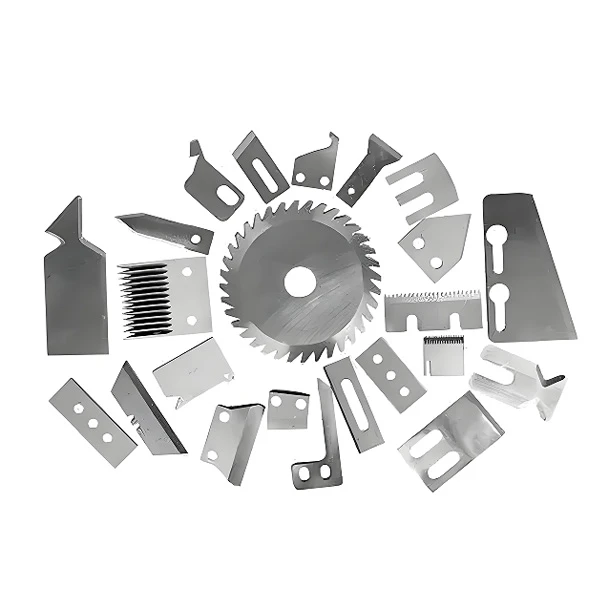
Complete Cutting Tool Portfolio for Paraguay

A comprehensive range of blades engineered for the South American industrial environment.

Industrial Cutting FAQ - Paraguay

Expert answers to common technical queries from our local clients.

How to choose the right tungsten carbide slitting machine blades for humid environments?

For humid regions like Paraguay, we recommend blades with anti-corrosive coatings such as TiN or DLC, which prevent oxidation and maintain the cutting edge longer than untreated steel.

What is the typical lifespan of rotary slitter knives in high-volume metal processing?

Lifespan depends on the material hardness, but our premium rotary knives typically offer 3-5 times the longevity of standard HSS blades due to advanced heat treatment.

Can tomato slicer blades be customized for different organic product densities?

Yes, we offer customized bevel angles and serration patterns to ensure clean cuts regardless of the product's ripeness or skin thickness.

How do I prevent burrs when using a straight cutting blade on aluminum sheets?

Preventing burrs requires a precise clearance setting between the blade and the counter-blade, combined with a high-precision ground edge to ensure a clean shear.

What are the advantages of shear slitting knives over traditional guillotine cutters?

Shear slitting provides continuous processing, higher speed, and more consistent width tolerances, which are essential for modern industrial automation.

Do you provide technical support for blade installation in Paraguay?

We provide comprehensive digital installation guides and remote technical consultancy to ensure optimal alignment and performance of your tooling.

Optimize Your Production Today

Contact our engineering team to find the perfect cutting solution for your facility in Paraguay.

Contact Us Now

If you are interested in our products, you can choose to leave your information here, and we will be in touch with you shortly.