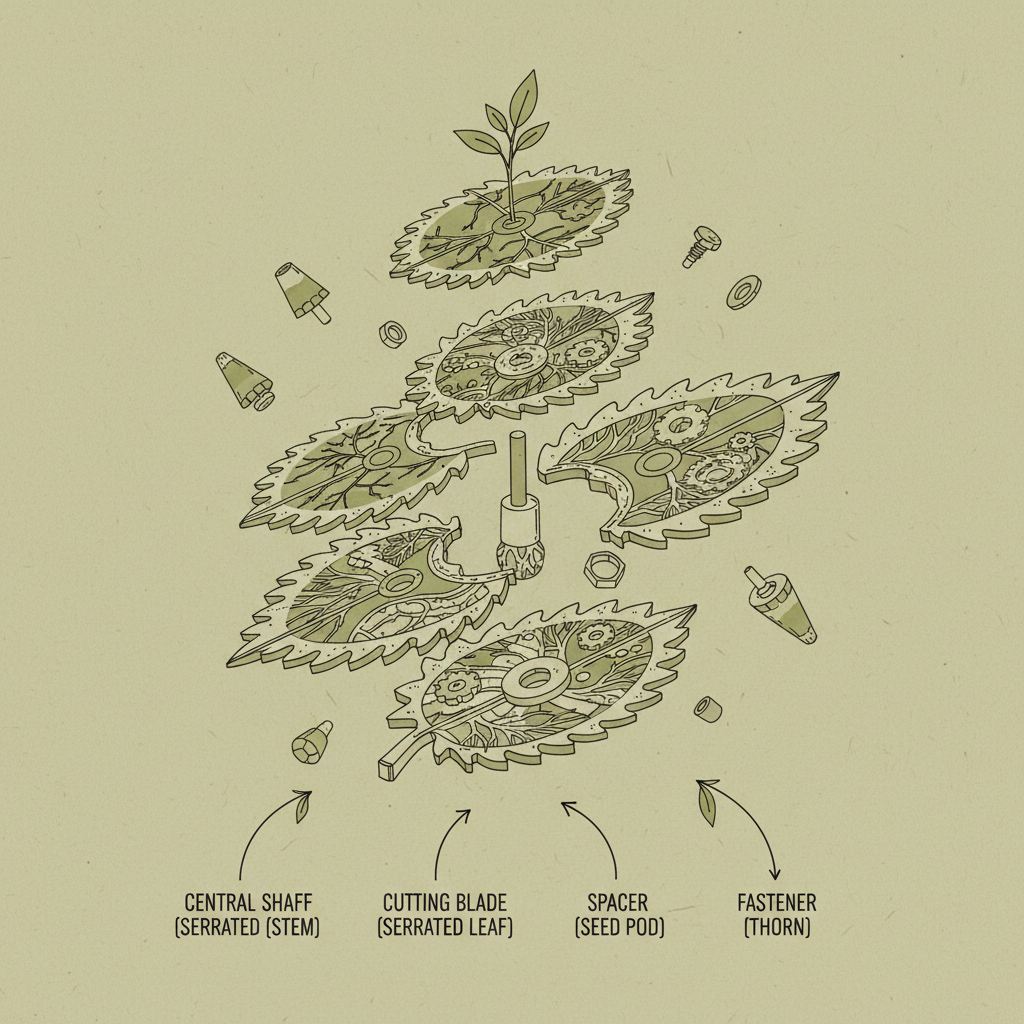
High Performance Scrap Steel Shredder Circular Blades Manufacturer
Efficient metal recovery depends heavily on the durability and geometry of the cutting tools used in shredding systems. For operations dealing with high-carbon steel, automotive frames, and construction debris, selecting the right cutting edge is the difference between continuous uptime and frequent, costly maintenance. As a specialized circular blades manufacturer, we focus on the intersection of metallurgical science and mechanical engineering to produce edges that resist brittle fracture while maintaining extreme hardness.
Our scrap steel crusher blades are engineered to handle the most aggressive materials, from thin automotive shells to thick-walled structural beams. By optimizing the heat treatment process—specifically through vacuum quenching and cryogenic treatment—we ensure that each component can withstand the high-impact forces typical of industrial shredders. Whether your facility focuses on electronic waste, car dismantling, or heavy industrial scrap, the choice of material and blade profile determines your overall throughput and energy consumption.

High-Performance Materials for Heavy-Duty Metal Shredding
The operational environment of a scrap steel crusher is characterized by extreme abrasion and sudden impact loads. To combat this, we employ a strategic selection of alloy steels tailored to specific material properties. High manganese steel is frequently utilized for scenarios requiring maximum impact resistance, such as processing mixed waste from household appliances or car shells, where the material's ability to absorb energy prevents catastrophic failure.
For high-precision, high-volume batch processing of thick-walled steel, alloy tool steel such as Cr12MoV is the preferred choice. After undergoing specialized vacuum heat treatment, these blades achieve a hardness range of HRC 58-62, providing a critical balance between wear resistance and toughness. Furthermore, for the most demanding high-speed rotating conditions, high-strength alloy steels containing tungsten and cobalt are deployed to enhance fatigue resistance, ensuring the edge remains sharp even when processing alloy steels.
- Vacuum Quenching + Cryogenic Treatment: Ensures uniform hardness (HRC 55-65) and relieves internal stresses.
- Surface Engineering: Options for nitriding or TiN (Titanium Nitride) coatings to reduce friction and extend service life.
- Precision Forging: Integrated cutterhead forging prevents blade displacement caused by high-frequency vibrations.

Optimizing Blade Geometry for Diverse Scrap Scenarios
Not all scrap is created equal; therefore, a one-size-fits-all approach to blade design leads to inefficiency. We categorize our blade profiles based on the physical characteristics of the input material. Straight-edged blades are ideal for thinner metal sheets and mixed soft materials, providing a clean shear with minimal resistance. However, when the input shifts to heavy construction machinery scrap or steel bars, curved blades are implemented to enhance penetration through hard objects via an arc-shaped cutting motion.
For materials that tend to jam the system, such as industrial gears or tire rims, serrated blades are used to tear the material apart rather than simply shearing it. We also offer advanced combination designs, such as claw-shaped blades (3, 8, or 12 claws), which coordinate multi-axis rotation to compress and shear large-volume structural beams, resulting in more uniform fragment sizes (typically 10-50mm) for better smelting efficiency.
Integrating these shapes allows operators to create a multi-angle cutting system. By combining straight, curved, and toothed edges, a crusher can adapt to mixed waste streams—such as combined metal and plastic composites—improving the overall sorting and recovery rate of the recycling facility.
Critical Application Fields and Operational Integration
The implementation of high-grade cutting tools spans the entire resource recycling chain. In automobile disassembly plants, the priority is the efficient separation of metallic and non-metallic components. Blades here must resist impact from car frames and wheels while reducing the manual labor required for engine and transmission dismantling. In construction waste treatment, the focus shifts to processing steel reinforcement bars and pipes embedded in concrete, where the blade must balance hardness with corrosion resistance to handle damp, debris-heavy environments.
Industrial waste recycling, particularly stamping waste and factory scraps, requires a high level of consistency to maintain throughput. By using a circular blades manufacturer with precision tolerances (straightness error ≤ 0.02mm), enterprises can reduce the energy consumption of their electric arc furnaces by providing more uniform raw material fragments.
For urban solid waste centers and landfills, the challenge is the unpredictable nature of the waste. Integrated wear monitoring sensors and CNC gap adjustment systems (accuracy ± 0.1mm) are recommended to ensure that the blade clearance (usually 0.1-0.5mm) is optimized in real-time, preventing the accumulation of metal debris and reducing the risk of equipment downtime.
Technical Specifications and Application Suitability
| Material Grade | Hardness (HRC) | Typical Application | Key Performance Feature |
|---|---|---|---|
| High Manganese Steel | HRC 50-55 | Mixed Waste / Car Shells | High Impact Resistance |
| Cr12MoV Alloy Steel | HRC 58-62 | Thick-walled Steel Bars | Balanced Wear & Toughness |
| Tungsten-Cobalt Alloy | HRC 63-65 | High-Speed Shredding | Extreme Fatigue Resistance |
| Carbide Inserted | HRC 65+ | Alloy Steel / Stainless | Maximum Abrasive Wear Resistance |
| TiN Coated Steel | HRC 58-62 | Continuous Industrial Use | Reduced Friction / Low Wear |
Precision Manufacturing Standards and Quality Control
Quality in industrial cutting tools is defined by tolerances and metallurgical consistency. Our manufacturing process adheres to strict ISO 9001 standards, ensuring that every blade produced meets the required geometric specifications. Edge roughness is maintained at ≤ Ra0.4 μm, and angle tolerances are controlled within ± 0.5°. Such precision is vital because even a minor deviation in the cutting angle can lead to increased shear resistance and premature blade failure.
The assembly process is equally critical. We utilize laser welding or argon arc welding for the blade-to-handle connection, followed by ultrasonic testing to verify the absence of internal cracks or pores. To ensure stability during high-speed operation, each assembled unit undergoes a dynamic balance test with a speed deviation of ≤ 2%. This eliminates vibration that could otherwise damage the crusher's bearings or cause the blades to shift from their intended gap.
Maintenance is the final pillar of performance. We recommend a grinding cycle of 200-300 hours per assignment, depending on the material hardness. Hard alloy blades can typically be reground 3-5 times before replacement is necessary. Regular cleaning of residual metal debris and the application of rust-proof oil in humid environments are essential steps to maximize the ROI of the cutting system.
Procurement Strategy and Selection Framework
When sourcing cutting tools for scrap processing, buyers often make the mistake of pursuing maximum hardness without considering toughness. A blade that is too hard becomes brittle and may shatter when encountering a piece of high-strength alloy steel. The optimal strategy is to match the material grade to the specific scrap type: use high manganese steel for unpredictable mixed waste and Cr12MoV for consistent, thick-walled industrial scrap.
Furthermore, the blade's physical shape must align with the equipment's power system and feeding speed. Hook-shaped or plate-hammer designs are superior for thick-walled steel, whereas straight blades are more efficient for thin-gauge metals. Overloading a system with the wrong blade profile not only shortens the tool's life but also puts undue stress on the crusher's motor and drive train.
Ultimately, partnership with a technical supplier allows for customized solutions. From adjusting the carbon content (0.65-0.95%) to implementing specialized coatings, the goal is to achieve a symbiotic relationship between the tool, the machine, and the material. This holistic approach ensures higher purity in metal recovery and lower overall operational costs for the recycling plant.
Expert Insights on Scrap Crusher Blade Selection
How do I choose between high manganese steel and alloy tool steel?
Select high manganese steel if your material stream includes unpredictable, high-impact items like mixed household appliances or car frames, as it prevents brittle fracture. Choose alloy tool steel (like Cr12MoV) for consistent, high-hardness materials such as industrial steel bars where wear resistance is the priority.
What is the ideal fragment size for steel smelting preparation?
Typically, crushing scrap into fragments of 10-50mm is ideal. This size improves transportation efficiency and allows the material to be fed directly into electric arc furnaces, shortening smelting time and reducing energy consumption.
How often should the blades be reground or replaced?
A typical grinding cycle is every 200-300 hours of operation. However, you should monitor the edge; if wear exceeds 0.1mm, regrinding is necessary. Hard alloy blades can generally be reground 3-5 times before they must be replaced.
Can curved blades be used for thin sheet metal?
While possible, curved blades are designed for penetration of thick, heavy metals. For thin sheet metal or lightweight scrap iron, straight-edged blades are more efficient as they provide a cleaner shear with lower resistance.
What are the benefits of TiN coating on shredder blades?
Titanium Nitride (TiN) coatings significantly reduce metal-to-metal friction loss. This not only extends the continuous operation life of the blade but also helps prevent material adhesion, which is particularly useful in plastic-metal composite waste.
What is the most common cause of blade breakage in shredders?
The most common cause is the mismatch between blade hardness and material toughness. Pursuing extreme hardness without sufficient toughness leads to brittle fracture when the blade hits an unexpectedly hard object or an oversized piece of alloy steel.
Technical Resources and Industry Standards
- Overview of Cutting Blade Engineering and Types
- ISO 9001 Quality Management Systems for Manufacturing
- ASTM International Standards for Alloy Steel Properties
- Industrial Cutting Solutions for Metal Recovery
Selecting the right cutting tool is a critical engineering decision that impacts the efficiency of the entire recycling process. By balancing metallurgical properties with precise geometric design, operators can maximize their resource recovery rates while minimizing maintenance downtime. For customized technical consultations or specialized blade development, our engineering team is ready to assist your operational needs.
Related Articles