Slitter knife grinding machines are critical components in a vast array of industries, from packaging and printing to plastics and textiles. These machines ensure the precision and longevity of slitter knives, which are used to accurately cut materials into desired widths. The quality of the grind directly impacts the efficiency of the cutting process, the quality of the finished product, and ultimately, the profitability of the operation. Understanding the nuances of slitter knife grinding machine technology is therefore paramount for businesses seeking to optimize their production processes.
The global demand for efficiently manufactured goods continues to rise, putting increasing pressure on industries to optimize their processes. This demand fuels the need for sophisticated slitter knife grinding machines capable of handling diverse knife materials, geometries, and production volumes. According to industry reports, the market for precision grinding machines, including those for slitter knives, is projected to experience steady growth in the coming years, driven by advancements in automation and the increasing adoption of lean manufacturing principles.
Investing in a robust slitter knife grinding machine isn’t merely an equipment purchase; it's an investment in process reliability and product consistency. A well-maintained slitter knife, achieved through proper grinding, minimizes waste, reduces downtime, and enhances the overall quality of the finished product. This ultimately leads to increased customer satisfaction and a stronger competitive position in the marketplace.
Introduction to Slitter Knife Grinding Machine
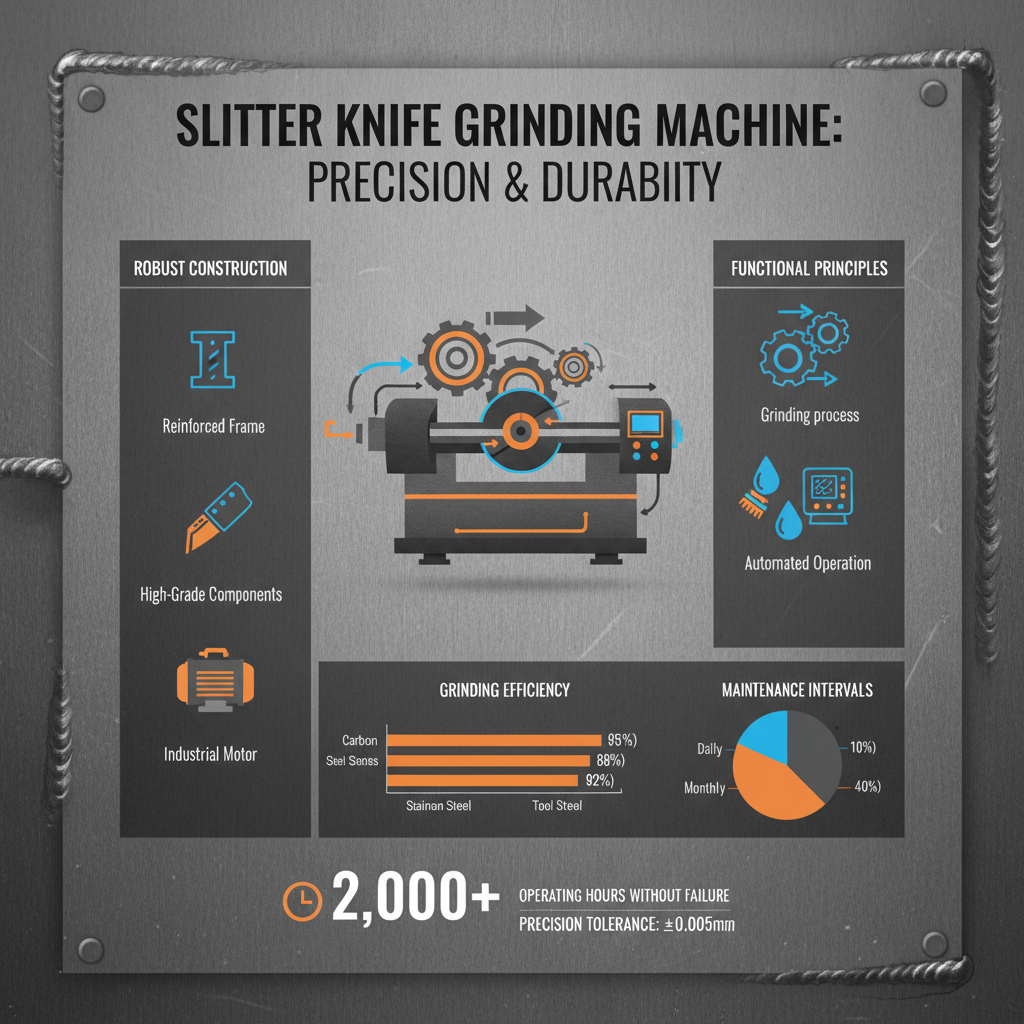
A slitter knife grinding machine is a specialized piece of equipment designed to restore the sharp cutting edges of slitter knives. These knives, essential in various industrial processes, become dull over time due to wear and tear. A grinding machine precisely removes material to recreate the original knife geometry, ensuring optimal performance. Modern slitter knife grinding machines often incorporate CNC technology for enhanced precision and repeatability.
The increasing demand for precision in manufacturing has driven innovation in slitter knife grinding machine technology. Manufacturers are constantly seeking ways to improve the speed, accuracy, and automation of these machines, resulting in higher throughput and reduced labor costs. Furthermore, the ability to grind a wider range of knife materials, including specialized alloys and coated knives, has become a critical requirement.
Global Relevance and Industry Context
The need for slitter knife grinding machines spans numerous industries globally. The packaging industry, a multi-billion dollar market, heavily relies on precise slitting for producing everything from food packaging to industrial wraps. The printing industry also depends on sharp slitter knives for accurate paper and film cutting. According to UN Comtrade data, international trade in machinery for metalworking – which includes slitter knife grinding machines – exceeds $60 billion annually, highlighting its global economic significance.
Regions with significant manufacturing bases, such as China, Germany, and the United States, are major consumers of slitter knife grinding machines. However, demand is also growing in emerging economies as these countries develop their manufacturing sectors. The increasing focus on sustainability and waste reduction further drives the need for efficient slitting processes and well-maintained slitter knives. A dull knife produces scrap and increases energy consumption.
The challenge lies in ensuring consistent knife quality across diverse operating environments. Factors such as material variations, operator skill, and machine maintenance can all impact the performance of slitter knives. Slitter knife grinding machines provide a crucial solution by enabling companies to maintain optimal knife sharpness and extend knife life, leading to significant cost savings and improved product quality.
Defining the Slitter Knife Grinding Machine
A slitter knife grinding machine is essentially a precision tool used to reshape and sharpen slitter knives. Unlike general-purpose grinding machines, slitter knife grinders are specifically designed to accommodate the unique geometry of these knives, which often feature complex angles and profiles. The machine utilizes abrasive wheels or discs to carefully remove material from the knife’s cutting edge, restoring its sharpness and accuracy.
The connection to modern industry is undeniable. The slitter knife grinding machine underpins efficient manufacturing processes in sectors like paper converting, plastic film production, and textile manufacturing. Without precisely ground slitter knives, these industries would face increased waste, reduced productivity, and lower product quality. This directly impacts global supply chains and consumer goods availability.
The humanitarian impact, while less direct, is also relevant. Efficient packaging, enabled by precise slitting, is crucial for preserving food and medical supplies, particularly in disaster relief and developing nations. Reliable packaging reduces spoilage and ensures that essential goods reach those in need. Therefore, the slitter knife grinding machine, through its contribution to efficient packaging, plays a role in safeguarding global well-being.
Key Factors in Slitter Knife Grinding Machine Performance
One crucial factor is Precision. A high-precision machine ensures that the knives are ground to the exact specifications, minimizing errors and ensuring consistent cutting performance. CNC-controlled grinders excel in this area. Another important aspect is Versatility, the ability to handle a variety of knife materials (steel, carbide, etc.) and geometries.
Automation is also key, particularly in high-volume production environments. Automated grinding machines reduce labor costs, minimize operator error, and improve overall efficiency. Grinding Wheel Quality significantly impacts the finish and accuracy of the grind. Using high-quality abrasive wheels extends knife life and reduces the need for frequent regrinding. Finally, Machine Rigidity ensures minimal vibration during the grinding process, leading to a smoother, more precise finish.
Slitter Knife Grinding Machine Performance Metrics
Applications Across Industries
In the packaging industry, slitter knife grinding machines are essential for producing precise cuts in plastic films, paper, and laminates used for food packaging, industrial wraps, and consumer goods. This ensures accurate sealing and product protection. The printing industry utilizes these machines to create clean cuts in paper rolls for magazines, newspapers, and other printed materials, minimizing waste and maintaining print quality.
The textile industry also relies on slitter knife grinding machines for slitting fabrics and non-woven materials used in apparel, home furnishings, and industrial applications. The plastics industry uses them extensively for slitting plastic sheets and films used in various products, including containers, bags, and protective coverings. In remote industrial zones, the ability to perform on-site slitter knife grinding is critical for maintaining production continuity.
Furthermore, slitter knife grinding machines play a role in specialized applications such as the production of adhesive tapes, labels, and medical films. The demand for precise and consistent slitting in these industries drives the need for high-quality grinding machines and skilled operators.
Advantages and Long-Term Value
The advantages of investing in a quality slitter knife grinding machine are numerous. Reduced downtime due to sharper, more efficient knives translates directly into cost savings. Extended knife life minimizes replacement costs, contributing to a higher return on investment. Improved product quality, resulting from cleaner, more accurate cuts, enhances customer satisfaction and brand reputation.
The long-term value extends beyond purely financial considerations. Investing in a reliable grinding machine demonstrates a commitment to quality and sustainability, enhancing a company's image and building trust with customers. Furthermore, a well-maintained knife contributes to a safer working environment by reducing the risk of accidents and injuries.
Future Trends and Innovations
The future of slitter knife grinding machine technology is leaning towards increased automation and integration with Industry 4.0 principles. We are seeing more machines equipped with advanced sensors and data analytics capabilities, allowing for predictive maintenance and optimized grinding cycles. Digital twin technology, where a virtual replica of the machine is used for simulation and optimization, is also gaining traction.
The development of new abrasive materials and grinding techniques promises to further enhance precision and efficiency. Furthermore, there’s growing interest in eco-friendly grinding processes that minimize waste and energy consumption. The integration of AI and machine learning algorithms is expected to revolutionize the way slitter knives are ground, leading to self-optimizing machines that require minimal human intervention.
The use of robotics in the knife handling and loading/unloading process is also expected to become more prevalent, further reducing labor costs and improving safety. These innovations will ultimately lead to more efficient, sustainable, and cost-effective slitter knife grinding operations.
Challenges and Solutions
A common challenge is achieving consistent grinding results across different knife materials and geometries. This requires skilled operators and properly configured grinding parameters. Another challenge is dealing with the heat generated during the grinding process, which can affect knife hardness and dimensional accuracy. Proper cooling systems and appropriate grinding speeds are essential.
The high initial investment cost of advanced slitter knife grinding machines can also be a barrier for some companies. However, this cost can be offset by the long-term benefits of reduced downtime, extended knife life, and improved product quality. A solution lies in exploring financing options and considering refurbished machines from reputable vendors.
Finally, maintaining operator skills and knowledge is crucial. Regular training programs and access to technical support can help ensure that operators are proficient in using the machine and achieving optimal grinding results. Proper preventative maintenance schedules are also critical to avoid costly repairs and downtime.
Summary of Key Challenges and Solutions in Slitter Knife Grinding Machine Operation
| Challenge |
Impact on Operation |
Solution |
Implementation Cost (1-10) |
| Inconsistent Grinding Results |
Reduced Cutting Accuracy, Increased Waste |
Operator Training, Optimized Grinding Parameters |
4 |
| Heat Generation During Grinding |
Knife Hardness Reduction, Dimensional Inaccuracy |
Improved Cooling Systems, Controlled Grinding Speeds |
6 |
| High Initial Investment |
Limited Accessibility for Smaller Businesses |
Financing Options, Refurbished Machines |
7 |
| Lack of Operator Skill |
Poor Grinding Quality, Increased Downtime |
Regular Training Programs, Technical Support |
3 |
| Machine Maintenance |
Unexpected Downtime, Repair Costs |
Preventative Maintenance Schedules, Spare Parts Inventory |
5 |
| Material Variation |
Difficulty Adapting Grinding Parameters |
Material-Specific Grinding Profiles, Automated Adjustment |
6 |
FAQS
CNC slitter knife grinding machines offer significantly greater precision and repeatability compared to manual machines. They utilize computer-controlled movements to ensure accurate grinding angles and profiles, reducing operator error. Manual machines, while less expensive, require a highly skilled operator to achieve consistent results. CNC machines are ideal for high-volume production and complex knife geometries, while manual machines may be suitable for smaller operations or occasional grinding tasks.
The frequency of regrinding depends on several factors, including the material being cut, the cutting speed, and the knife material itself. Generally, knives should be reground when they begin to show signs of dullness, such as increased cutting force, burring, or uneven cuts. Regular inspection and monitoring of knife performance are crucial to determine the optimal regrinding schedule. Ignoring dullness leads to increased waste and potential damage.
Slitter knife grinding machines typically utilize flood coolant systems, where a continuous stream of coolant is applied to the grinding wheel and knife during the grinding process. This helps to dissipate heat, prevent thermal distortion, and improve the surface finish of the knife. Some machines also employ mist cooling systems, which use a fine mist of coolant to reduce heat buildup while minimizing coolant consumption.
Most slitter knife grinding machines can handle a variety of materials, including high-speed steel (HSS), carbide, and various alloy steels. However, the specific grinding parameters and abrasive wheels must be selected based on the material being ground. Carbide knives, for example, require diamond abrasive wheels, while HSS knives can be ground with conventional abrasive wheels.
Automation significantly improves the slitter knife grinding process by reducing labor costs, minimizing operator error, and increasing consistency. Automated machines can perform repetitive tasks with greater precision and speed, leading to higher throughput and improved product quality. They also often incorporate features such as automatic wheel dressing and profile correction, further enhancing efficiency.
Operating a slitter knife grinding machine requires strict adherence to safety protocols. Always wear appropriate personal protective equipment (PPE), including safety glasses, gloves, and a dust mask. Ensure that the machine is properly grounded and that all safety guards are in place. Never attempt to grind knives that are damaged or cracked. Regularly inspect the machine for any signs of wear or malfunction.
Conclusion
In conclusion, the slitter knife grinding machine remains a vital component across a diverse range of industries, underpinning efficient manufacturing processes and product quality. From the intricacies of precision grinding to the advancements in automation and material science, the technology continues to evolve to meet the demands of a globalized marketplace. Investing in the right slitter knife grinding machine and maintaining it effectively is not just a cost-saving measure, but a strategic advantage.
Looking ahead, the integration of AI, machine learning, and sustainable practices will shape the future of slitter knife grinding machine technology. Continued innovation in abrasive materials, cooling systems, and automation will further enhance performance and efficiency. Companies that embrace these advancements will be well-positioned to thrive in an increasingly competitive landscape. Visit our website at www.mechblades.com to learn more about our slitter knife grinding machine solutions.