Round slitter blades are precision cutting tools integral to a vast array of industries, from paper and packaging to plastics and textiles. Their ability to deliver clean, accurate cuts at high speeds makes them essential for efficient production processes globally. Understanding their design, materials, and applications is crucial for optimizing performance and minimizing downtime in modern manufacturing.
The global demand for round slitter blades is directly linked to the growth of packaging, particularly in emerging economies experiencing increased consumer spending. According to a recent report by Smithers Pira, the global packaging market is projected to reach $1.04 trillion by 2028. This necessitates a continuous supply of high-quality slitter blades to meet production demands. The challenges lie in balancing cost-effectiveness with blade longevity and performance.
These blades aren’t simply metal components; they are critical enablers of sophisticated manufacturing workflows. Advancements in materials science and blade geometry are continually improving their cutting capabilities and lifespan. From enabling the production of lightweight packaging materials to ensuring the precision needed for specialized textiles, round slitter blades play a pivotal, often unseen, role in the products we use every day.
The Importance of Round Slitter Blades
Round slitter blades are foundational to countless manufacturing processes. Their precision cutting ability directly impacts product quality, production speed, and ultimately, profitability. Investing in the right blades isn’t merely a cost; it’s a strategic move that minimizes waste, reduces downtime, and enhances overall operational efficiency.
The consistent demand for these tools highlights their indispensable role in modern industry. From the production of food packaging to the manufacture of high-tech materials, round slitter blades are critical components in ensuring smooth and reliable production lines. Proper selection and maintenance of these blades are paramount to achieving optimal results.
Defining Round Slitter Blades and Their Relevance
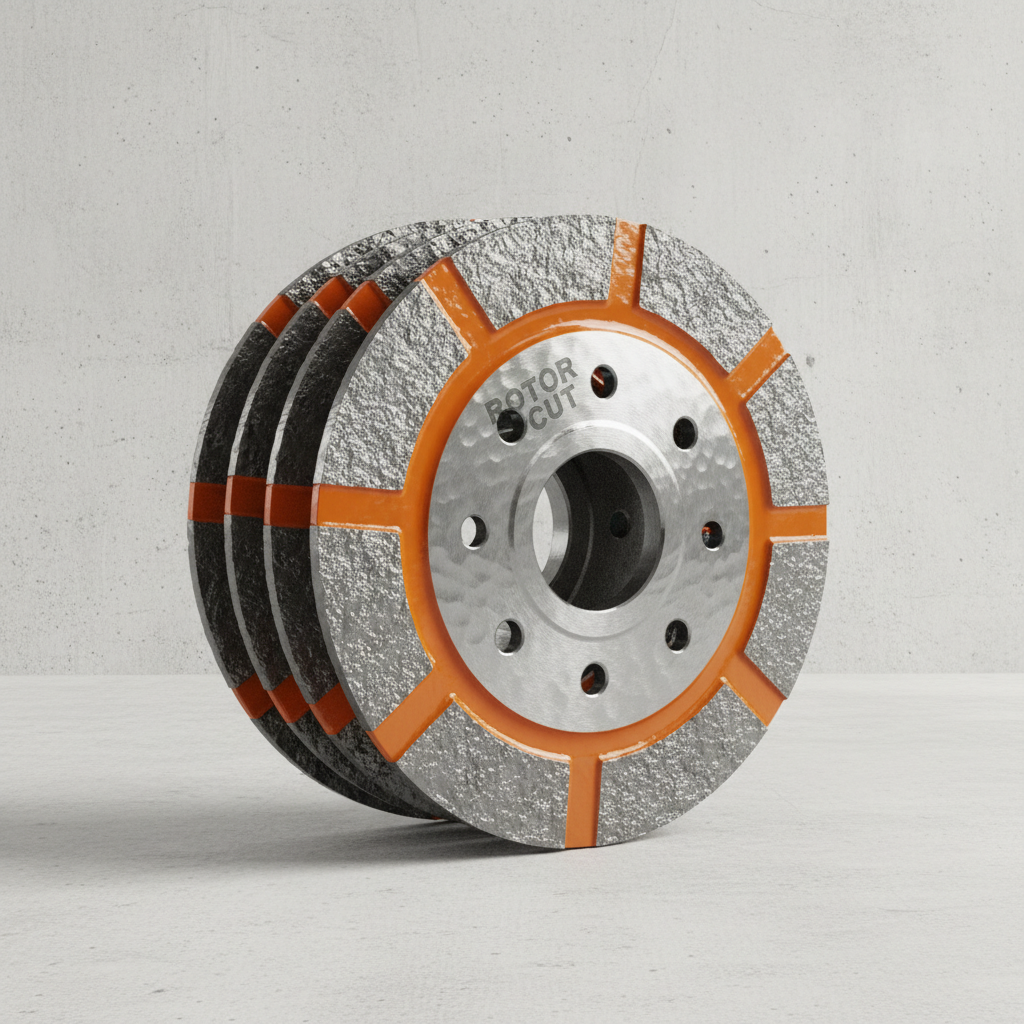
Round slitter blades are cylindrical cutting tools used to precisely slice materials into specific widths. They are commonly employed in converting processes such as slitting and rewinding of rolls of paper, plastic film, nonwoven fabrics, and other flexible materials. These blades rotate at high speeds to create clean, accurate cuts, often in continuous operations.
Their relevance stems from the need for efficient and precise material processing in a wide range of industries. Without accurate slitting, materials can exhibit uneven edges, resulting in product defects and wasted material. The ability of round slitter blades to deliver consistent, high-quality cuts is therefore vital for maintaining production standards.
Compared to other cutting methods, such as shearing or die-cutting, round slitting offers advantages in terms of speed, precision, and the ability to handle continuous web processing. This makes them particularly suitable for high-volume production environments where minimizing waste and maximizing efficiency are crucial.
Key Characteristics of High-Quality Round Slitter Blades
Several key characteristics define a high-quality round slitter blade. Firstly, material composition is critical. Blades are typically made from tool steels, high-speed steels, or carbide materials, each offering varying degrees of hardness, wear resistance, and corrosion resistance. The choice of material depends on the type of material being cut and the operating environment.
Secondly, blade geometry plays a significant role. Factors such as blade thickness, diameter, and edge angle impact cutting performance and blade lifespan. Precise grinding and honing are essential to achieve a sharp, consistent cutting edge. A poorly ground blade will result in ragged cuts and increased wear.
Thirdly, hardness is a crucial factor. The Rockwell hardness rating indicates a blade’s resistance to indentation, influencing its ability to maintain sharpness under stress. Fourthly, surface finish impacts friction and material flow during cutting. A smooth, polished surface reduces drag and minimizes heat buildup. Finally, blade runout, or the degree of wobble during rotation, is critical for maintaining cut accuracy. Excessive runout can lead to inconsistent cuts and blade damage.
Performance Factors and Measurement
Evaluating the performance of round slitter blades requires understanding key factors and utilizing appropriate measurement techniques. Cutting edge life is a primary concern, often measured in linear feet of material cut or total operating hours. Factors influencing edge life include material hardness, blade material, cutting speed, and material contamination.
The quality of the cut is assessed by examining edge smoothness, burr formation, and overall dimensional accuracy. Visual inspection, microscopic analysis, and dimensional measurements can be used to quantify cut quality. Furthermore, blade vibration can significantly impact performance and lifespan. Excessive vibration can lead to premature wear and decreased cut accuracy.
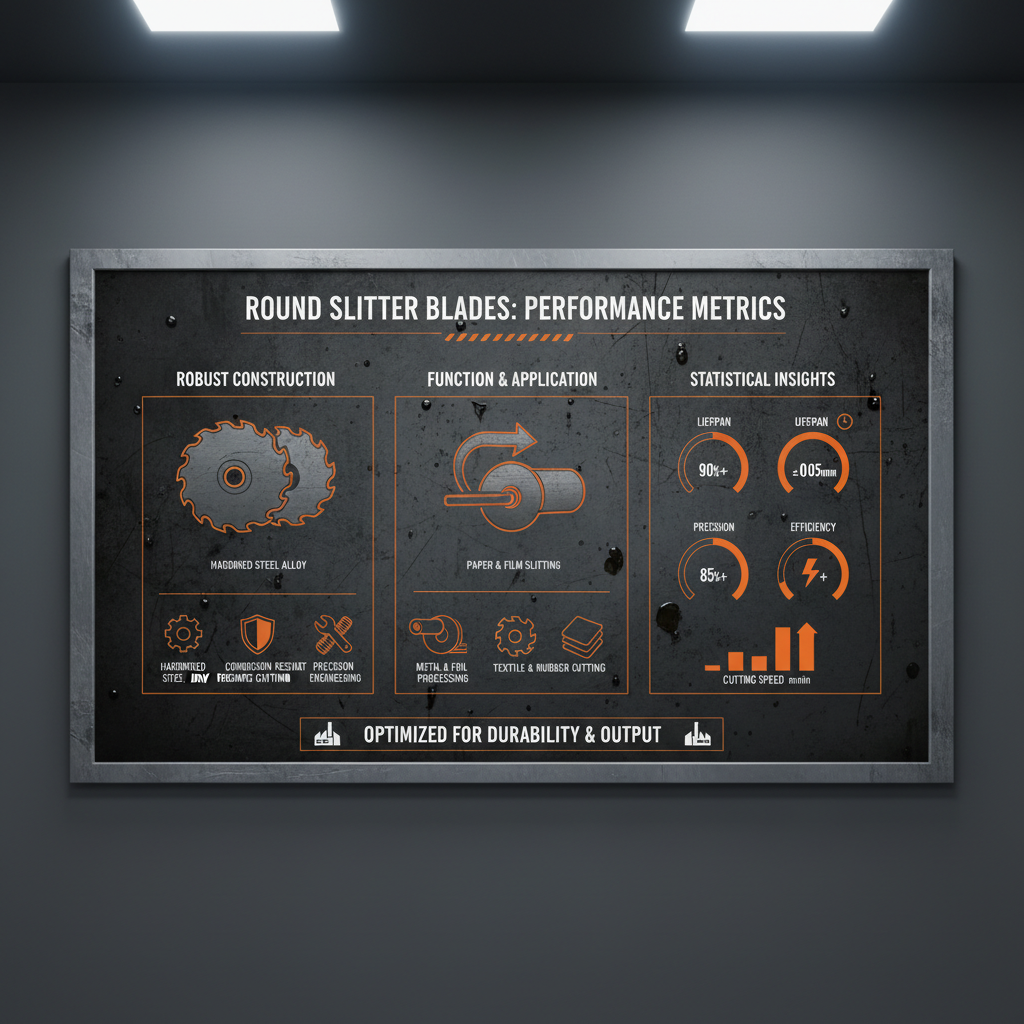
Round Slitter Blades Performance Metrics
Global Applications Across Industries
Round slitter blades find applications in a remarkably diverse range of industries. In the paper and packaging industry, they are fundamental to the production of corrugated cardboard, paper rolls, and flexible packaging films. These blades ensure accurate and efficient slitting of materials for various packaging applications.
The plastics industry relies heavily on round slitter blades for processing plastic films, sheets, and other flexible plastic materials. From food packaging to industrial films, precise slitting is essential for creating consistently sized and shaped products. Moreover, in the textile industry, they are used for slitting fabrics and nonwoven materials during the manufacturing of apparel, technical textiles, and hygiene products.
The Advantages of Investing in Superior Blades
Investing in high-quality round slitter blades yields numerous tangible benefits. Reduced downtime is a significant advantage, as durable blades require less frequent replacement, minimizing production interruptions. This translates directly into increased productivity and profitability.
Improved cut quality results in reduced waste and fewer product defects, leading to significant cost savings. Furthermore, superior blades often offer extended lifespan, reducing the overall cost of ownership. Choosing the right blade also improves worker safety by minimizing the risk of blade failure and potential injuries.
Future Trends and Technological Advancements
The future of round slitter blade technology is focused on innovation and sustainability. Advanced materials, such as ceramic and polycrystalline diamond (PCD), are gaining traction due to their exceptional hardness and wear resistance. These materials extend blade life and reduce the need for frequent replacements.
Smart blade technology, incorporating sensors and data analytics, is emerging. This allows for real-time monitoring of blade condition, predictive maintenance, and optimized cutting parameters. The integration of automation and robotics in slitting processes will also drive efficiency and precision. Finally, there is a growing emphasis on eco-friendly blade materials and recycling programs to minimize environmental impact.
Summary of Round Slitter Blade Material Properties and Applications
| Material Type |
Hardness (Rockwell C) |
Typical Applications |
Cost (Relative) |
| Tool Steel (D2) |
60-65 |
Paper, light plastics, textiles |
Low |
| High-Speed Steel (M2) |
62-66 |
Paper, medium-weight plastics, adhesives |
Medium |
| Carbide (Tungsten Carbide) |
75-85 |
Abrasive materials, heavy plastics, films |
High |
| Ceramic (Alumina) |
85-90 |
Thin films, delicate materials, high-speed applications |
Very High |
| Polycrystalline Diamond (PCD) |
90+ |
Extremely abrasive materials, high-volume production |
Extremely High |
| Coated Carbide |
70-80 |
Versatile applications, improved wear resistance |
Medium-High |
FAQS
The lifespan of a round slitter blade varies widely depending on factors like blade material, the type of material being cut, cutting speed, and maintenance. Generally, high-speed steel blades may last for several thousand linear feet, while carbide or ceramic blades can achieve significantly longer lifespans, potentially exceeding tens of thousands of feet. Regular inspection and resharpening can also extend blade life.
Resharpening frequency depends on the material being cut and the blade's initial sharpness. As a general guideline, blades should be resharpened when noticeable edge wear occurs, resulting in tearing or rough cuts. Regular visual inspection, and monitoring for increased force needed during cutting, can help determine the optimal resharpening schedule. Excessive resharpening will reduce blade size.
Round slitter blades are commonly made from tool steels (like D2), high-speed steels (like M2), tungsten carbide, ceramic materials (like alumina), and occasionally PCD. Tool steels are more cost-effective for less demanding applications, while carbide and ceramic offer superior wear resistance for abrasive materials and high-speed cutting.
Selecting the appropriate blade requires considering several factors. First, identify the material you'll be cutting and its abrasiveness. Then, determine the required cut quality and speed. Consider the blade's material, geometry, and hardness. Consulting with a slitter blade supplier or engineer can provide tailored recommendations.
Round slitter blades are extremely sharp and require careful handling. Always wear appropriate personal protective equipment (PPE), including cut-resistant gloves and safety glasses. Use proper lifting techniques and avoid applying excessive force during installation or removal. Store blades securely to prevent accidental contact.
Yes, many round slitter blades can be recycled, particularly those made from carbide and high-speed steel. Recycling programs are available through specialized metal recyclers. Recycling reduces environmental impact and recovers valuable materials. Consult with your blade supplier or a local recycling center for options.
Conclusion
Round slitter blades are indispensable components of modern manufacturing, enabling efficient and precise material processing across a vast spectrum of industries. Understanding their characteristics, selecting the appropriate blades for specific applications, and implementing proper maintenance practices are critical for maximizing performance, minimizing downtime, and optimizing profitability. From material composition to blade geometry, each aspect plays a crucial role in achieving superior cutting results.
Looking ahead, advancements in materials science, smart blade technology, and automation will continue to revolutionize the slitting process. Embracing these innovations and prioritizing sustainability will be key to ensuring the long-term viability and efficiency of the industry. For high-quality round slitter blades and expert guidance, visit our website today.