THE BUYER'S GUIDE / SELECTION
Choosing Circular Slitter Blades: Application Fit and Specification Checks
Selecting the right circular slitter blades requires matching blade material, geometry, and hardness to the specific material being cut and the operating conditions of the slitting line. This guide walks procurement teams and engineers through the key selection criteria—material type, thickness, cutting speed, and precision requirements—and maps those criteria to the blade grades documented by Changzhou Binsheng Metallurgical Machinery Co., Ltd. It also covers when to request custom designs and what specification checks to perform before placing an order.

Material being cut (workpiece type and hardness): drives the choice between alloy tool steel, high-speed steel, cemented carbide, and special alloy steel grades
Sheet or strip thickness: thick plates require high-toughness grades (Cr12MoV, 6CrW2Si) to resist edge cracking; thin sheet and foil require high-wear-resistance grades (cemented carbide, HSS) to sustain sharp edges through long runs
Required cut precision and surface finish: precision slitting demands powder-metallurgy HSS or SKD-11 with precision grinding to achieve controlled edge roughness
Cutting speed and thermal load: high-speed metal cutting (up to 50 m/min) and paper/foil lines (200–300 m/min) require appropriate grade and coating (e.g., TiN) to manage heat and sticking
Operating environment and corrosion exposure: food, medical, and corrosion-prone applications require stainless substrate with hard-alloy coating or blackening treatment
Heat treatment and surface treatment specifications: vacuum quenching, cryogenic treatment, TiN coating, nitriding, and chromium plating must match the application to achieve stated hardness and service life
What Are Circular Slitter Blades?
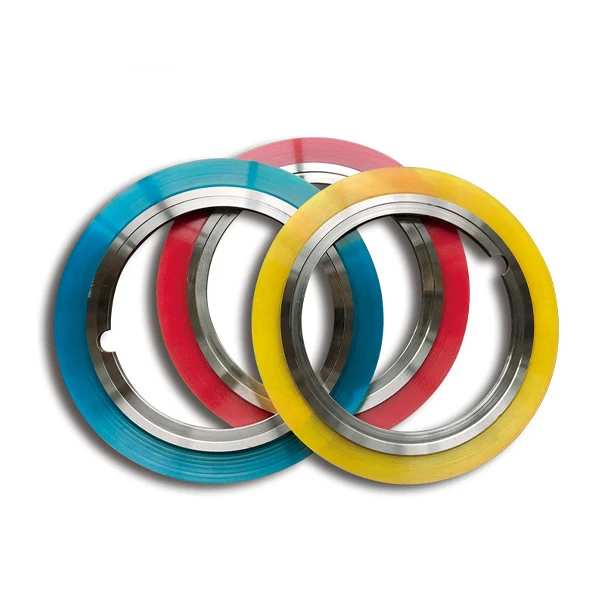
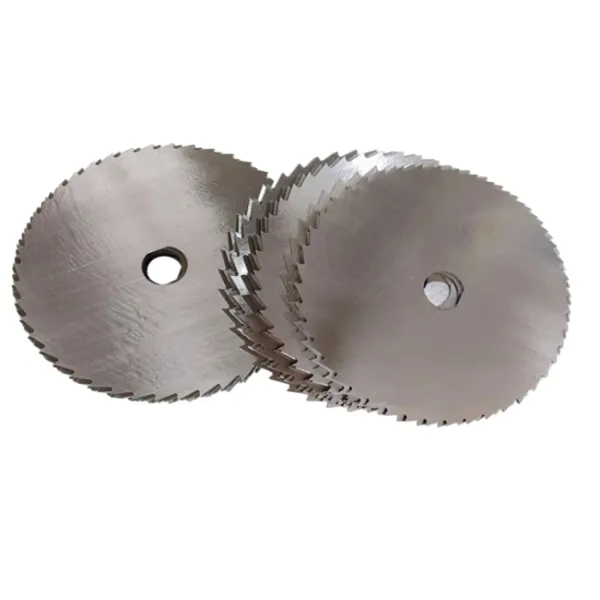
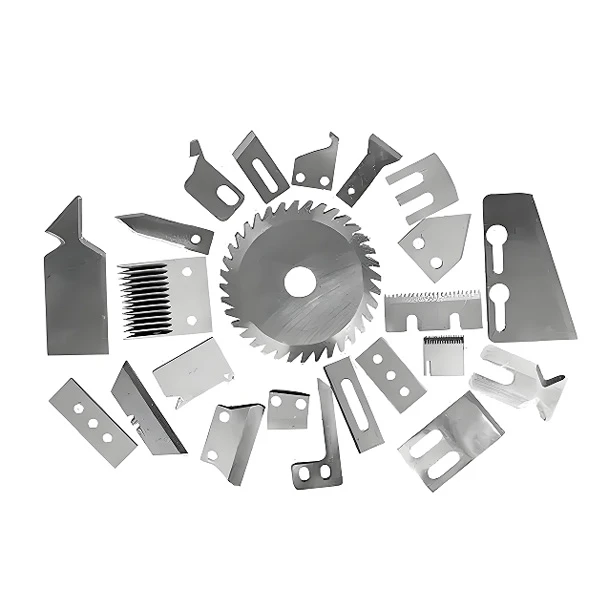
Circular slitter blades—also called slitting disc cutters—are rotary cutting tools mounted in pairs (upper and lower) on a slitting line. They make longitudinal cuts in continuous sheet or strip material by engaging through the material thickness as the strip passes between them. Changzhou Binsheng Metallurgical Machinery Co., Ltd. produces these blades for metal processing as well as for paper, film, foil, and packaging applications.
Because the blade must withstand both continuous abrasion and intermittent impact loads, choosing the correct grade and geometry is the single most important step in managing blade life, cut quality, and machine downtime.
Key Selection Criteria
1. Material Being Cut
The workpiece material drives the first and largest choice: blade hardness and toughness.
| Workpiece | Recommended Blade Grade | Reason |
|---|---|---|
| Stainless steel, auto-body sheet (thick) | Cr12MoV, 6CrW2Si | High toughness; resists edge cracking under impact |
| Silicon steel sheet, tinplate (thin, high-speed) | W18Cr4V / SKH (HSS), TiN-coated | High hardness, good wear resistance; TiN reduces sticking |
| Aluminium foil, copper strip (high-precision) | Powder-metallurgy HSS | Superior wear resistance; edge roughness controllable to Ra 0.4 µm |
| Ultra-thin film, adhesive tape, titanium alloy | Cemented carbide (MN1, MN8) | Extreme wear resistance; smooth, burr-free incision |
| Hot-rolled steel strip (high temperature) | LD steel, 6CrW2Si | Heat-resistant; resists deformation at elevated temperatures |
| Stainless steel / galvanised sheet | H13K (surface-blackened) | Corrosion resistance plus wear resistance |
| Tinplate for electronic casings (precision) | SKD-11 | Uniform hardness HRC 60–62; consistent precision slitting |
| Rubber, non-woven fabrics (light duty) | 65Mn, 9CrSi | Lower cost; requires more frequent grinding |
| Food / medical (rust sensitivity) | Stainless substrate + hard-alloy coating | Combines corrosion resistance with wear resistance |
Note: Cemented-carbide blades offer outstanding wear resistance but lower toughness. They are not recommended for thick-plate applications where impact loads are high.
2. Sheet Thickness
Thickness determines the required toughness level:
- Thick plates — Prioritise toughness. Grades such as Cr12MoV and 6CrW2Si absorb impact without chipping.
- Thin sheet and foil — Prioritise wear resistance. Cemented carbide and high-speed steel maintain sharp edges through long production runs.
3. Required Cut Precision
For high-precision slitting applications, the blade material and surface finish must be specified together:
- Powder-metallurgy high-speed steel and SKD-11 are the choices for precision slitting.
- Edge geometry and surface finish (e.g., Ra 0.4 µm) are achieved through precision grinding; material selection alone is not sufficient.
- For packaging films and composite materials, cutting accuracy of ±0.1 mm is achievable with appropriately selected circular blades.
4. Cutting Speed
High-speed lines (up to 50 m/min for metal strip; 200–300 m/min for paper/foil) place additional thermal and abrasion demands on the blade:
- HSS grades (W18Cr4V, SKH) are for high-speed metal cutting up to 50 m/min.
- For paper and foil slitting at high web speeds, circular blades with magnetic powder tension control are used to maintain consistent strip tension.
- TiN coating on HSS blades reduces the tendency for workpiece material to stick to the cutting edge at elevated speeds.
5. Application Sector
Circular slitter blades serve distinct application sectors, each with its own priority:
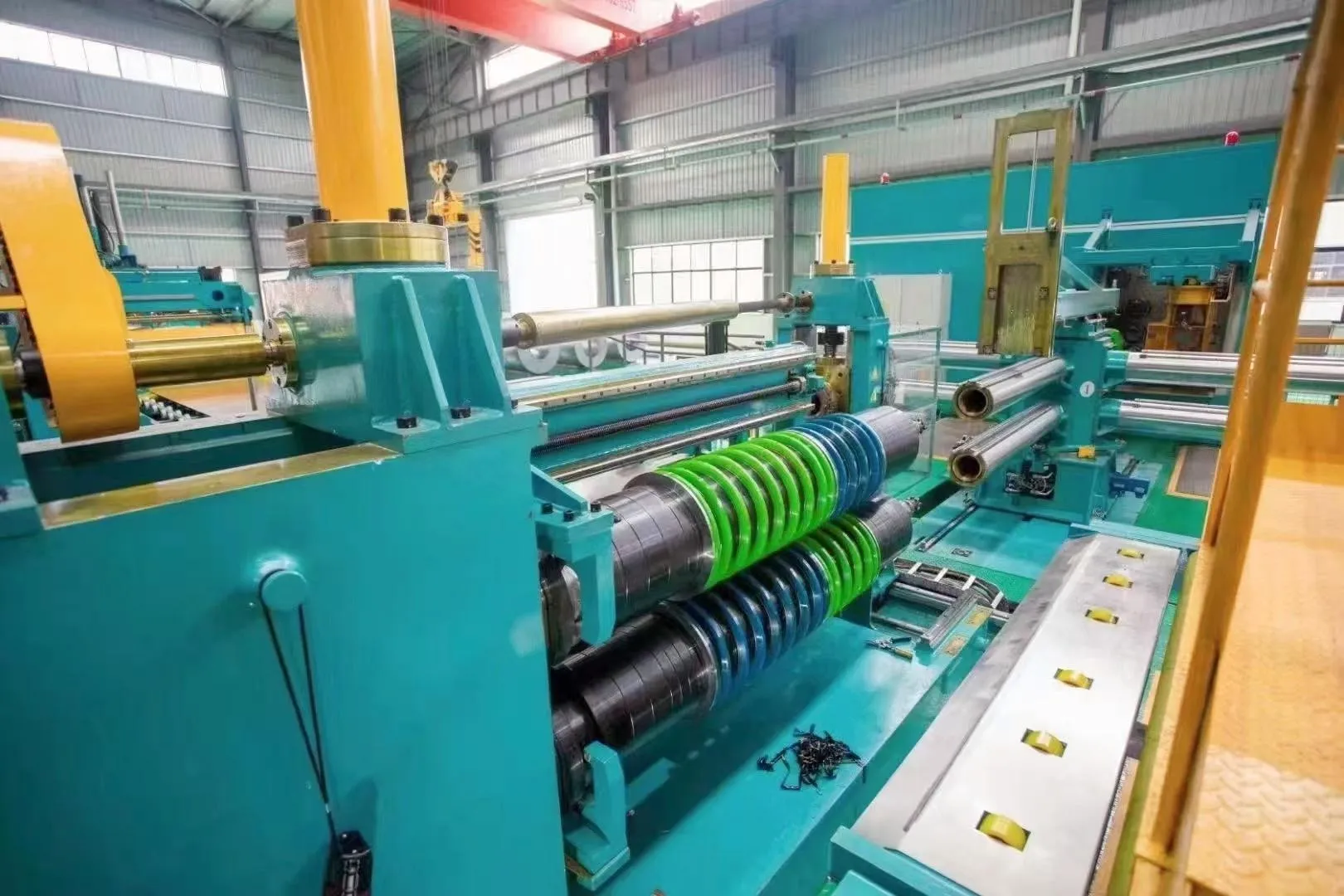
Metal processing: Stainless steel, aluminium, copper, cold-rolled, hot-rolled, and pickled steel coils are the primary target materials. Longitudinal engagement of upper and lower blades produces strip widths suited for building curtain walls, automotive components, and other structural applications.
Paper and packaging: Circular blades with diameters of 100–300 mm are used to slit large-roll base paper into narrow rolls at speeds of 200–300 m/min. Aluminium foil, composite film, and corrugated board are also cut with circular blades, achieving ±0.1 mm accuracy for synchronous high-speed sealing machine operation.
Electronic and precision film: SKD-11 blades serve tinplate used in electronic component casings, where uniform hardness across the blade cross-section is critical for dimensional consistency.
Specification Checks Before Ordering
Before finalising a purchase, confirm the following specification points with your supplier:
- Blade material and grade — Verify the grade matches the workpiece type and thickness using the material selection principles above.
- Hardness range — For example, Cr12MoV blades should reach HRC 58–62 after vacuum quenching and cryogenic treatment; SKD-11 should reach HRC 60–62.
- Heat treatment process — Vacuum quenching and cryogenic treatment are required for Cr12MoV to achieve stated hardness and to minimise distortion.
- Surface treatment — Confirm whether TiN coating, surface nitriding, chromium plating, or blackening treatment is included, and verify it matches your application.
- Edge geometry and finish — For precision applications, specify the required surface roughness (e.g., Ra 0.4 µm) and confirm the grinding process.
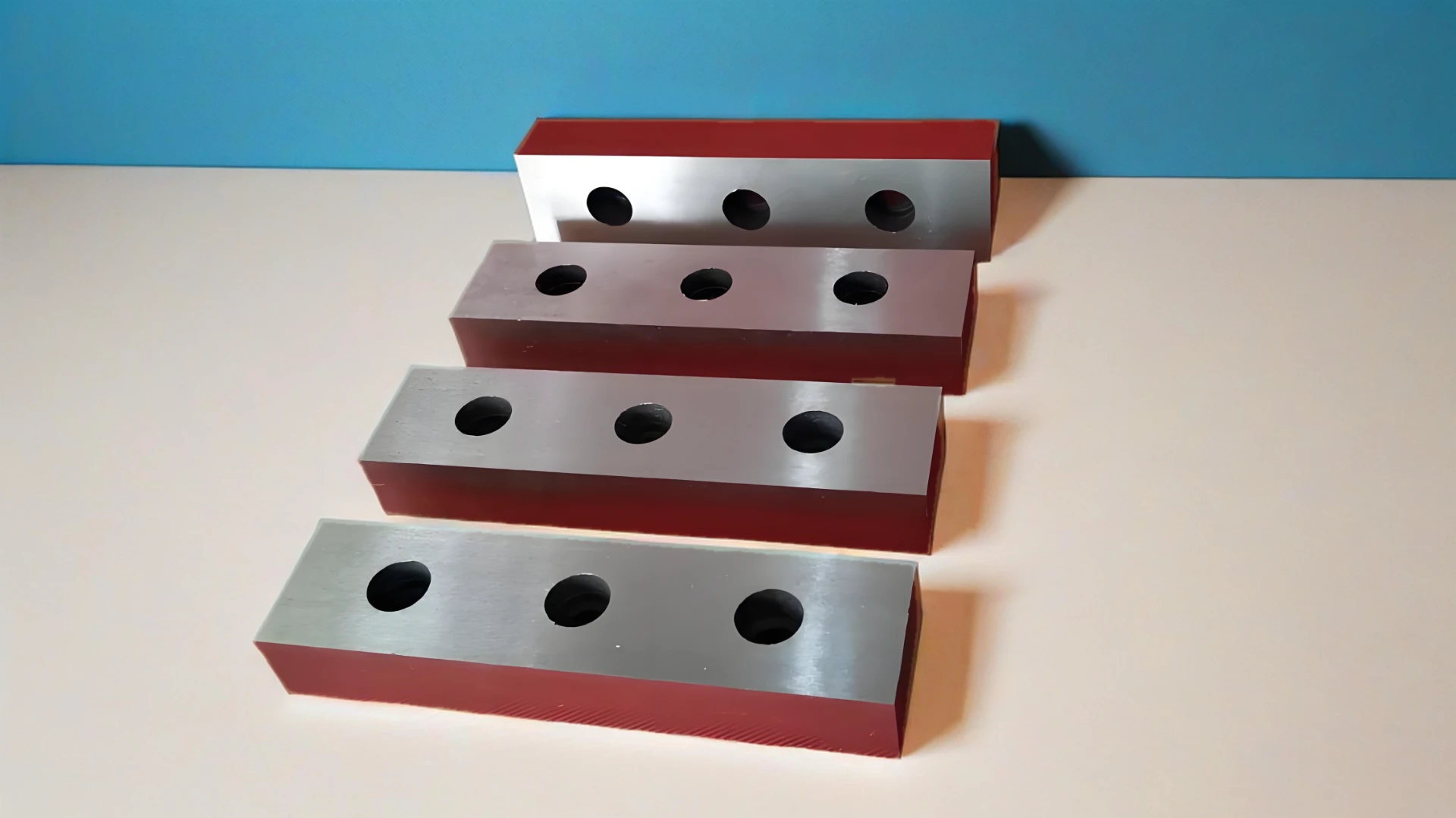
- Blade dimensions — Outside diameter, bore diameter, thickness, and clearance angle must match the slitting machine arbor and the intended strip width.
- Application-specific design — Blades for hot-rolled steel strip cutting at high temperatures require heat-resistant grades (LD steel, H13K); confirm this is not substituted with a standard cold-work grade.
When to Request a Custom Design
Standard catalogue grades cover the majority of metal, paper, film, and foil applications. A custom design discussion is warranted when:
- The workpiece is an unusual alloy (e.g., titanium alloy or specialised stainless grades) where standard toughness-hardness trade-offs do not apply cleanly.
- Operating temperatures significantly exceed normal cold-work ranges.
- Strip width tolerances are tighter than standard precision grinding can deliver.
- The slitting machine arbor geometry differs from standard configurations.
Changzhou Binsheng Metallurgical Machinery Co., Ltd. documents 30 years of experience in producing slitting disc cutters for the metal industry, and its engineering team is available to advise on material selection and blade design for non-standard conditions.
Summary: Matching Blade to Application
The right circular slitter blade is determined by four converging factors: the material being cut, its thickness, the precision required, and the operating speed of the line. No single grade excels at all of them simultaneously—cemented carbide maximises wear resistance but cannot absorb the impact of thick-plate cutting; high-toughness alloy steels handle heavy stock but may need more frequent sharpening on abrasive thin materials.
Use the material selection principles and specification checklist in this guide as a structured starting point. For orders involving non-standard alloys, elevated temperatures, or unusually tight tolerances, engage the supplier's engineering team before finalising the specification.
THE PEOPLE

About the author
THE COMPANY
Changzhou Binsheng Metallurgical Machinery Co., Ltd.
Changzhou Binsheng Metallurgical Machinery Co., Ltd. stands as a premier manufacturer of industrial cutting blades and precision metal components, strategically positioned in Jiangsu Province's advanced manufacturing cluster within China's Yangtze River Delta economic zone. With two decades of continuous innovation and technical refinement, we have evolved into a technologically sophisticated enterprise recognized for our metallurgical expertise and manufacturing excellence.…
About Us ↗Visit company website ↗YOUR NEXT STEP
Bring your brief. Start a useful conversation.
Use case, specification, quantity and delivery window: make the next conversation specific.