In the high-precision world of industrial manufacturing, the efficiency of a production line often hinges on the smallest components. A high-quality round cutting blade serves as the heartbeat of various shearing and slicing operations, ensuring that materials are processed with surgical precision and minimal waste. Whether in the plastic processing industry or heavy-duty steel mills, these circular tools are indispensable for maintaining throughput and quality standards.
The global demand for precision cutting has surged as industries shift toward automation and tighter tolerances. The integration of advanced metallurgy in the production of a round cutting blade allows manufacturers to tackle tougher materials—from recycled scrap metals to reinforced polymers—without frequent downtime for sharpening or replacement. This evolution in tool design is critical for reducing operational costs and increasing the lifecycle of machinery.
Understanding the nuances of blade geometry, material composition, and heat treatment is essential for any facility manager aiming to optimize their workflow. By selecting the correct round cutting blade, companies can achieve a seamless balance between cutting speed and edge longevity, directly impacting the bottom line and ensuring a safer, more reliable industrial environment.
Global Industry Context of Round Cutting Blades
The global industrial landscape is currently witnessing a paradigm shift toward "Industry 4.0," where the precision of a round cutting blade is no longer just a preference but a requirement. With the rise of global trade and the expansion of the plastic and rubber industries—particularly in Southeast Asia and North America—the reliance on standardized, high-performance cutting tools has grown exponentially. ISO standards now dictate stricter tolerances for circular blades to ensure cross-border compatibility in automated machinery.
Despite this growth, many factories struggle with the "hidden cost" of blade failure. Unexpected breakage or premature dulling of a round cutting blade can lead to hours of unplanned downtime, which, according to industry estimates, can cost large-scale manufacturing plants thousands of dollars per minute. This challenge has pushed the market toward high-tungsten carbide and advanced alloy steels that can withstand extreme thermal stress and friction.
Defining the Modern Round Cutting Blade
At its most fundamental level, a round cutting blade is a circular tool designed to shear or slice materials through a combination of rotational speed and a sharpened edge. Unlike linear blades, the circular design allows for continuous cutting motions, which is essential for high-volume production lines where stopping and starting would be prohibitively inefficient.
In the context of modern industry, these blades are more than just "sharp discs." They are engineered components that integrate precise geometry—such as the rake angle and clearance angle—to minimize material deformation. For example, in the plastic processing industry, the specific edge profile of a round cutting blade determines whether a polymer is cut cleanly or crushed, directly affecting the quality of the final product.
Furthermore, these tools address critical humanitarian and environmental needs. In the waste and scrap recycling sector, heavy-duty circular blades enable the efficient shredding of plastics and metals, facilitating the circular economy by making raw material recovery economically viable. Without the robustness of the modern round cutting blade, the scale of global recycling efforts would be severely limited.
Core Components of Blade Performance
Durability is the primary metric for any round cutting blade. This is achieved through a combination of high-grade alloy selection and precise heat treatment processes, such as vacuum quenching, which ensures the blade maintains its hardness without becoming brittle. A durable blade reduces the frequency of replacements, thereby stabilizing production schedules.
Material compatibility is equally vital. A round cutting blade designed for food processing must be made from stainless steel to prevent contamination and corrosion, whereas a blade for the mining industry requires extreme wear-resistance to handle abrasive ores. Matching the blade material to the workpiece is the only way to avoid premature edge failure.
Precision and Scalability round out the core performance factors. The ability to manufacture a round cutting blade with micron-level concentricity prevents vibration during high-speed rotation. This stability not only improves the cut quality but also protects the machine's bearings and motor from excessive wear and tear.
Comparative Analysis of Cutting Efficiencies
When evaluating the efficiency of different round cutting blade configurations, it is important to look at the trade-off between initial cost and long-term yield. High-carbon steel blades offer an affordable entry point but require frequent sharpening, whereas carbide-tipped blades provide an order of magnitude more cuts per sharpening cycle.
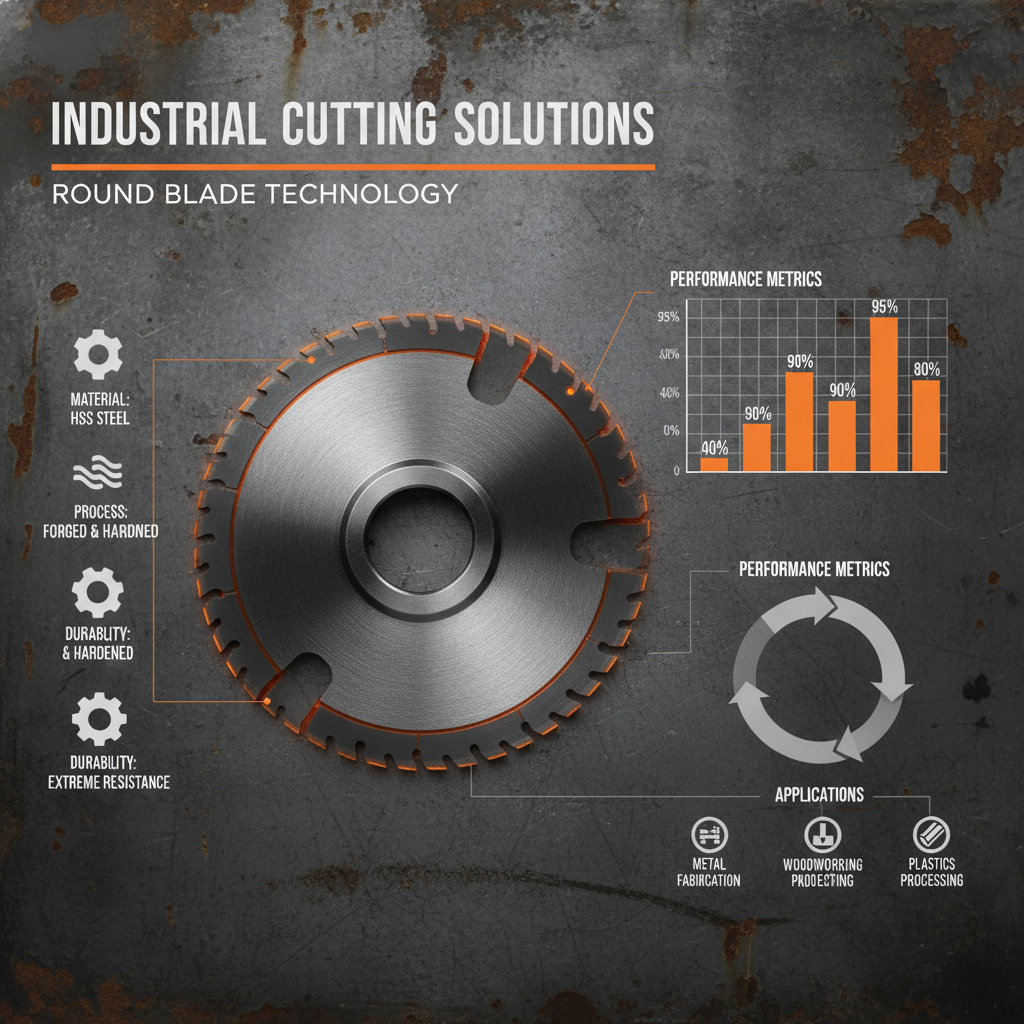
The following data illustrates how different material compositions for a round cutting blade perform across key industrial metrics, highlighting the superiority of advanced alloys in high-stress environments.
Efficiency Ratings by Round Cutting Blade Material
Global Applications Across Diverse Sectors
The versatility of the round cutting blade is evident in its widespread adoption. In the paper and wood industries, large-diameter circular blades are used to slice massive rolls of material into precise widths. In the food processing sector, specialized antimicrobial coatings are applied to the blades to ensure food safety while maintaining a razor-sharp edge for high-speed slicing of vegetables and meats.
Beyond standard factories, these tools are vital in remote industrial zones. For instance, in the mining sectors of Australia and Canada, oversized round cutting blade components are used in crushing machinery to process raw minerals. The ability of these blades to withstand extreme impact and abrasive wear allows for continuous operation in some of the harshest environments on Earth.
Long-term Value and Sustainability Benefits
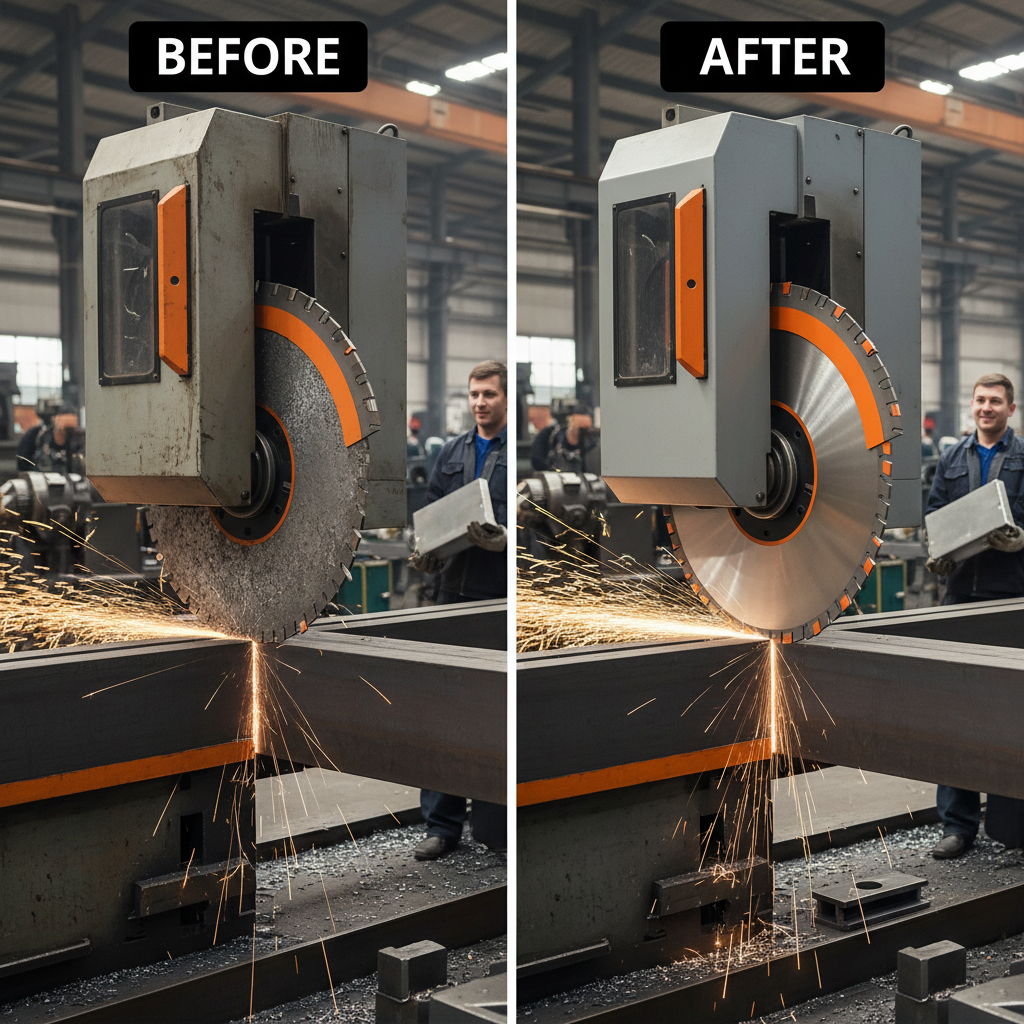
Investing in a premium round cutting blade provides tangible long-term value that extends beyond simple cutting speed. From a financial perspective, the reduction in "consumable spend" is significant; a blade that lasts three times longer reduces procurement costs and logistical overhead. Moreover, the increased precision leads to less material scrap, directly contributing to a company's sustainability goals.
From a human perspective, the reliability of a high-quality blade enhances workplace safety. Dull blades require more force to cut and are more prone to "kickback" or slipping, which increases the risk of operator injury. A sharp, stable round cutting blade ensures that the machinery operates within its designed parameters, fostering a culture of safety and trust on the factory floor.
Finally, the shift toward sustainable manufacturing encourages the use of blades that can be reground multiple times rather than discarded. This circular approach to tool maintenance reduces the carbon footprint associated with the smelting and forging of new steel, aligning industrial growth with global environmental responsibilities.
Future Trends in Cutting Tool Technology
The future of the round cutting blade is being shaped by the integration of "smart" materials and coatings. Diamond-like carbon (DLC) coatings are becoming more common, providing a surface hardness that nearly eliminates friction. This allows blades to run cooler at higher speeds, drastically extending the interval between maintenance cycles.
Digital transformation is also entering the fray. We are seeing the emergence of "predictive maintenance" for cutting tools, where sensors monitor the vibration and heat of a round cutting blade in real-time. These systems can alert operators exactly when a blade is beginning to dull, allowing for a scheduled changeover that prevents the catastrophic failure of the tool.
As automation continues to evolve, the demand for highly specialized, custom-engineered blades will grow. The transition toward green energy will likely drive the need for blades capable of processing new, sustainable composites and bio-plastics, ensuring that the round cutting blade remains a cornerstone of industrial progress.
Comparison of Round Cutting Blade Specifications by Industry
|
Target Industry
|
Primary Material
|
Edge Geometry
|
Wear Resistance (1-10)
|
| Plastic Processing |
D2 Tool Steel |
Acute Angle |
7 |
| Steel Mills |
Tungsten Carbide |
Beveled Edge |
10 |
| Waste Recycling |
High-Manganese Steel |
Heavy-Duty Flat |
9 |
| Food Processing |
440C Stainless |
Ultra-Thin Edge |
6 |
| Mining Industry |
Cobalt-Alloy Steel |
Reinforced Toe |
10 |
| Paper Industry |
HSS (High Speed Steel) |
Precision Ground |
8 |
FAQS
The choice depends entirely on the material being cut. For abrasive materials like ores or steel, tungsten carbide or cobalt alloys are recommended due to their extreme hardness. For corrosive environments like food processing, stainless steel is mandatory. For general plastics, D2 or HSS tool steels offer a great balance of edge retention and cost. Always consider the hardness of the workpiece versus the hardness of the blade to prevent premature chipping.
Most industrial round cutting blades are designed to be reground several times. Professional sharpening restores the original edge geometry and extends the tool's life significantly. However, once the blade diameter reaches a minimum threshold specified by the machine manufacturer, or if the structural integrity is compromised by micro-cracks, it must be replaced to avoid safety risks and production errors.
Premature failure is usually caused by three factors: excessive heat buildup due to lack of lubrication, improper installation leading to imbalance/vibration, or "material mismatch" where the blade is too brittle for the impact forces of the material. Ensuring the blade is perfectly concentric and using appropriate cooling systems can drastically reduce the occurrence of chipping.
Concentricity refers to how perfectly the center hole aligns with the outer diameter. If a round cutting blade is off-center, it creates a "wobble" during rotation. This causes uneven pressure on the material, leading to "chatter marks" or rough edges on the cut piece. High-precision grinding ensures that the blade rotates smoothly, resulting in a cleaner cut and less stress on the machine's motor.
Yes, especially in high-speed applications. Diamond-Like Carbon (DLC) coatings significantly reduce the coefficient of friction, which means the blade generates less heat and resists "sticking" when cutting polymers or adhesives. While the initial cost is higher, the increase in blade longevity and the reduction in downtime for cleaning usually result in a lower total cost of ownership.
Inspection frequency depends on the volume of production. For high-load environments, a daily visual check for chips and a weekly measurement of edge wear are recommended. Implementing a predictive maintenance schedule based on "cuts per blade" is the most professional approach, ensuring that blades are changed just before performance drops, rather than after a failure occurs.
Conclusion
In summary, the round cutting blade is far more than a simple industrial consumable; it is a precision-engineered tool that defines the efficiency, safety, and quality of modern manufacturing. From the selection of high-performance alloys to the implementation of smart coatings and predictive maintenance, every detail in the blade's design contributes to the overall productivity of the industrial chain. By balancing durability, material compatibility, and precision, manufacturers can significantly reduce waste and operational costs.
Looking ahead, the integration of AI-driven monitoring and next-generation composite materials will continue to push the boundaries of what a round cutting blade can achieve. We encourage facility managers and engineers to move beyond the "lowest initial cost" mindset and instead focus on the total lifecycle value of their cutting tools. Investing in superior blade technology today is the most reliable path toward a sustainable, automated, and high-yield production future. Visit our website: www.mechblades.com