THE BUYER'S GUIDE / SELECTION
Choosing a Slitting Knife for Tube Cutting: Application Fit and Specification Checks
Selecting the right slitting knife for tube cutting requires matching blade material, geometry, and performance parameters to your specific application. This guide walks procurement teams and engineers through the key criteria—material classification, blade shape, tolerance, cutting speed, and industry context—using confirmed product specifications from Changzhou Binsheng Metallurgical Machinery Co., Ltd. to support a well-reasoned purchasing decision.

Blade material class (Hard Alloy, HSS, Alloy Tool Steel, High Manganese Steel, or Composite Coated) matched to pipe hardness, wall thickness, and cutting speed—including whether the pipe is carbon, stainless, or high-alloy steel.
Blade shape and structural design (Straight, Bending, Circular/Saw, Wavy/Serrated, Precision Grinding Plane, Chip Breaker) matched to pipe geometry, required cut precision (e.g., perpendicularity ≤ 0.1 mm or surface accuracy ≤ 0.003 mm), and production mode (manual, semi-automatic, or fully automatic).
Dimensional tolerance and pipe diameter coverage: confirm whether the pipe diameter falls within the 3–50 mm universal range or requires a custom-shaped blade for diameters above 100 mm, and whether ultra-thin blade tolerances (≤ 0.002 mm) are needed.
Cutting speed and chip removal requirements: match line speed (e.g., 15–30 m/min for thick-walled pipes) and spindle RPM (≥ 3,000 r/min for HSS) to blade material to prevent accelerated wear or chipping.
What Is a Slitting Knife for Tube Cutting?
A slitting knife designed for tube cutting is a precision industrial blade engineered to separate steel pipes cleanly and accurately. Unlike general-purpose cutters, tube slitting blades must balance hardness, wear resistance, thermal stability, and toughness to handle a range of wall thicknesses, pipe diameters, and production volumes. Understanding which combination of these properties fits your operation is the first step toward selecting the right blade.
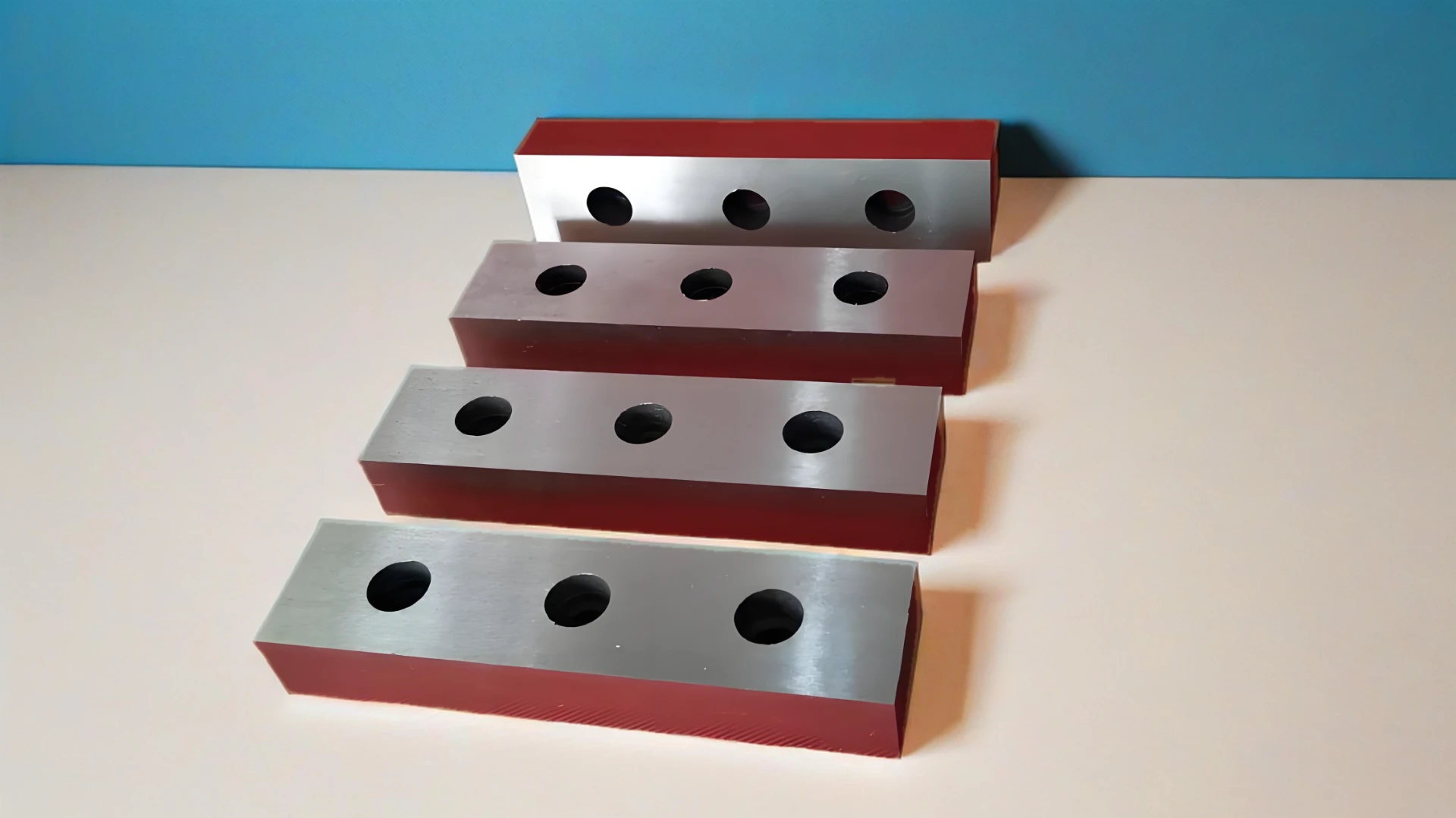
Changzhou Binsheng Metallurgical Machinery Co., Ltd. offers the Tube Slitting Cutter Knife, a product line built around these core demands—serving construction engineering, mechanical manufacturing, and energy and chemical applications.
Key Selection Criteria
1. Blade Material — Match Hardness and Toughness to Your Pipe
Material choice is the most fundamental decision when choosing a slitting knife. Each material class offers a different balance of wear resistance, impact tolerance, and thermal performance:
| Material Class | Key Characteristics | Best-Fit Application |
|---|---|---|
| Hard Alloy (Carbide) | Strong wear resistance, long service life | High-hardness steel pipes; stainless steel |
| High Speed Steel (HSS, incl. Tungsten-Molybdenum/Cobalt grades) | Supports high-speed cutting (≥ 3,000 r/min), excellent heat dissipation | Stainless steel pipes; high-speed continuous operations |
| Alloy Tool Steel (e.g., Cr12MoV, 9CrSi) | Vacuum heat treatment raises hardness to HRC 58–62; balances wear resistance with toughness | Batch cutting of carbon steel pipes |
| High Manganese Steel | High toughness with acceptable wear resistance | Rough cutting with high impact loads |
| Composite Coated Blade | Surface titanium plating or nitriding reduces friction and improves efficiency | Thin-walled steel pipes (≤ 2 mm) |
Procurement note: For precision components such as hydraulic cylinder barrels and transmission shafts, SKD11-grade material is specifically referenced to achieve perpendicularity ≤ 0.1 mm at the cut—a critical tolerance for downstream welding or machining.
2. Blade Shape and Structural Design
Blade geometry determines how the slitting knife engages the pipe and handles chip formation. The wrong geometry can cause blade slippage, pipe deformation, or premature wear:
| Blade Shape | Design Feature | Application Fit |
|---|---|---|
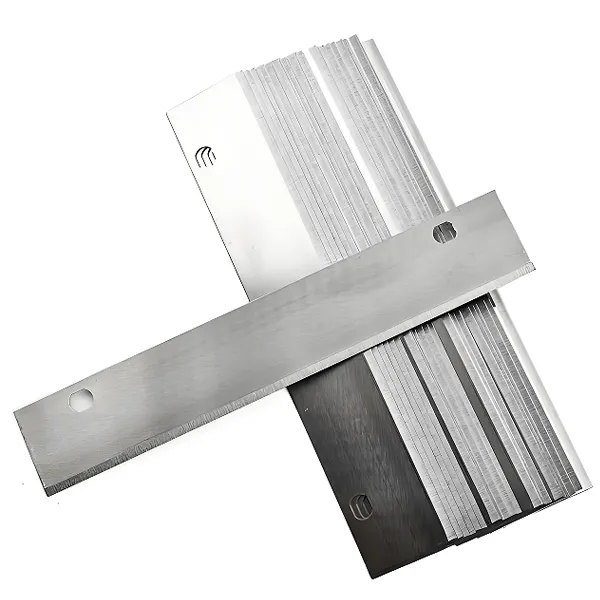
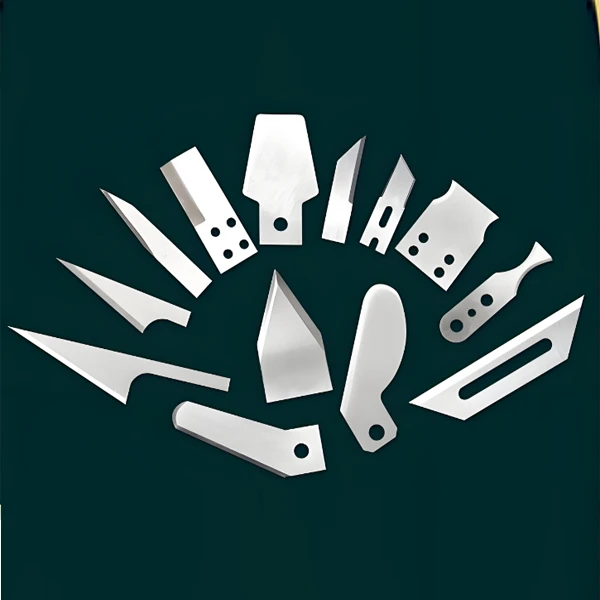
| Straight Knife | Long blade design reduces pipe deformation | Straight cuts in general pipe stock |
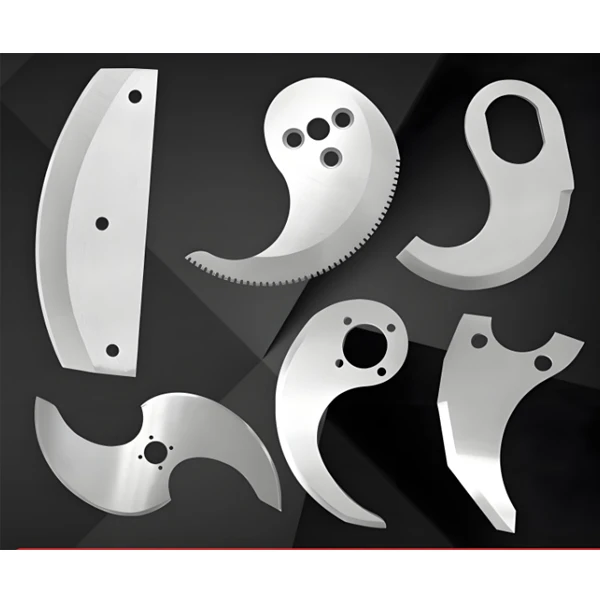
| Bending Knife | Curved blade improves biting on complex pipe shapes; prevents slippage | Irregular or complex cross-section pipes |
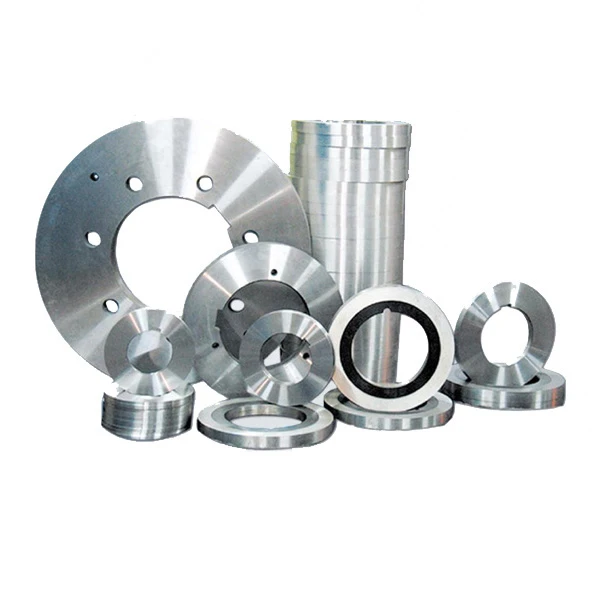
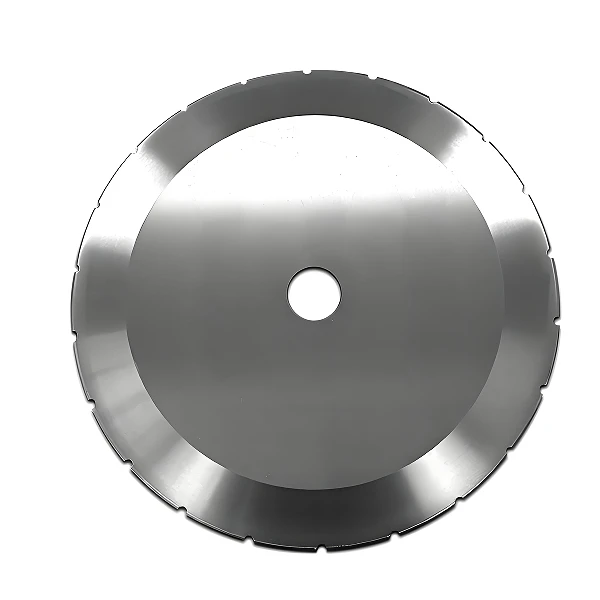
| Circular Blade / Saw Blade (OD ≥ 250 mm) | Rotary cutting; compatible with automatic pipe cutting machines | High-efficiency automated lines |
| Wavy / Serrated Cutting Edge | Disperses cutting stress; reduces breakage risk | Thick-walled pipes (≥ 5 mm) |
| Precision Grinding Plane | Surface accuracy ≤ 0.003 mm; burr-free cuts | Precision instrument tubing |
| Chip Breaker Design | Triangular or arc-shaped grooves discharge chips and prevent blade entanglement | High-speed continuous cutting conditions |
3. Dimensional Tolerance and Pipe Diameter Coverage
Tolerance requirements scale directly with the precision of your finished product:
- Ultra-thin blades (0.05–0.5 mm): Require tolerance control ≤ 0.002 mm. Mirror-treated blade surfaces are recommended for high-precision cutting scenarios.
- Standard coverage: Universal blades cover pipe diameters from 3–50 mm.
- Oversized pipes (diameter > 100 mm): Custom-shaped blades are required; off-the-shelf universal configurations will not meet fit or performance requirements.
Verify your target pipe diameter against the blade's rated coverage before placing an order, particularly when cutting pipes outside the standard 3–50 mm window.
4. Cutting Speed and Chip Removal
Operating speed must align with both the blade material and the wall thickness of the pipe:
- Hard alloy blades support high-speed cutting and are suited for demanding automated lines.
- Thick-walled pipes (e.g., oil/gas pipelines, reactor supports): Use serrated blades with reduced line speeds of 15–30 m/min and large feed parameters. This combination improves chip removal efficiency and extends blade life.
- HSS blades at ≥ 3,000 r/min deliver strong heat dissipation; confirm machine spindle ratings before selecting this class.
Mismatching cutting speed to blade material accelerates wear and increases the risk of chipping.
Industry Application Fit
Different sectors place distinct demands on a slitting knife. The table below summarizes the application contexts:
| Industry | Typical Pipe Type | Recommended Blade Priority |
|---|---|---|
| Construction Engineering | Scaffolding, support columns | Dense-toothed blades for burr reduction; batch-cutting durability |
| Mechanical Manufacturing | Hydraulic cylinder barrels, transmission shafts | High-precision blades (SKD11); perpendicularity ≤ 0.1 mm |
| Energy & Chemical | Oil/gas pipelines, reactor supports | Serrated blades; low-speed large-feed parameters (15–30 m/min) |
For construction applications, batch volume and operational intensity drive the selection toward dense-toothed, high-endurance configurations. For mechanical manufacturing, dimensional accuracy takes precedence. For energy and chemical pipelines—typically heavy-walled—chip removal and blade longevity are the governing factors.
Specification Checklist Before You Buy
Use this checklist to frame your purchasing enquiry:
- Pipe material: Carbon steel, stainless steel, or high-alloy? → Determines blade material class.
- Wall thickness: ≤ 2 mm (thin-wall), 2–5 mm (standard), or ≥ 5 mm (heavy-wall)? → Guides blade shape and edge design.
- Pipe diameter: 3–50 mm (standard coverage) or > 100 mm (custom)? → Flags whether a custom order is needed.
- Required cut precision: Perpendicularity tolerance, surface finish (burr-free or mirror-ground)? → Narrows material and surface treatment.
- Cutting speed / machine spindle: Line speed in m/min or spindle RPM? → Confirms material compatibility.
- Production mode: Manual, semi-automatic, or fully automatic? → Influences circular/rotary blade vs. straight/bending knife selection.
- Impact conditions: High-impact rough cutting? → Points toward high manganese steel or wavy edge designs.
Provide these parameters when contacting Changzhou Binsheng Metallurgical Machinery Co., Ltd. to receive accurate blade recommendations and avoid mismatched specifications.
Summary
No single slitting knife configuration suits every tube-cutting application. The decision tree runs from pipe material and wall thickness through cut-precision requirements, machine operating speed, and production volume. By working through the criteria above against your confirmed process parameters, you can identify the blade material, geometry, and tolerance class most likely to perform reliably in your facility—and avoid the cost of premature blade failure or dimensional rejects.
THE PEOPLE

About the author
THE COMPANY
Changzhou Binsheng Metallurgical Machinery Co., Ltd.
Changzhou Binsheng Metallurgical Machinery Co., Ltd. stands as a premier manufacturer of industrial cutting blades and precision metal components, strategically positioned in Jiangsu Province's advanced manufacturing cluster within China's Yangtze River Delta economic zone. With two decades of continuous innovation and technical refinement, we have evolved into a technologically sophisticated enterprise recognized for our metallurgical expertise and manufacturing excellence.…
About Us ↗Visit company website ↗YOUR NEXT STEP
Bring your brief. Start a useful conversation.
Use case, specification, quantity and delivery window: make the next conversation specific.